The Library as Moreno Valley's Missing Town Square
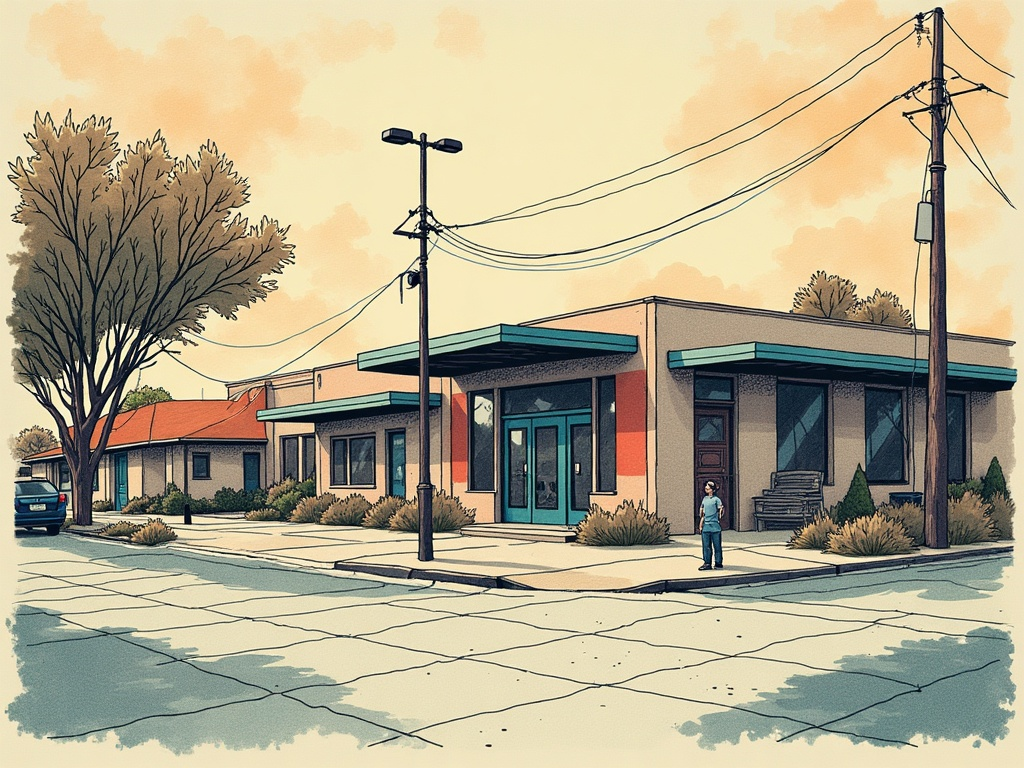
Look at the Moreno Valley Public Library's December calendar and a pattern emerges that has nothing to do with holidays. Between now and January 2, when regular hours resume after the Christmas and New Year closures, three branches, the Main Library on Alessandro Boulevard, the Mall Branch on Town Circle, and the Iris Plaza Branch on Perris Boulevard, will host toddler time, a STEM-focused Discovery Club, teen gaming nights, bilingual pajama storytelling, and, running through nearly every week, a program called Talk MoVal: free English conversation practice, open to all levels, no registration required, offered at multiple locations on a near-weekly rotation.
That last program is the one worth pausing on, because it reveals something about how this city works that its geography otherwise obscures. Moreno Valley has no historic downtown, no plaza, no courthouse square around which civic life naturally accumulates. It is a city organized around a mall and a boulevard, built fast in the late twentieth century to house people priced out of Los Angeles and Orange County, many of them immigrant families for whom Spanish is a first language and English an ongoing project. Cities like this are often described, not unfairly, as places without a center. But the library calendar suggests the center exists. It simply moved indoors, and it rotates.
Talk MoVal meets at the Main Library and again at Iris Plaza, on different afternoons, effectively guaranteeing that a resident anywhere in the city's sprawl has a free English conversation session within reach most weeks. This is not a one-off adult-education class with a semester structure and a waitlist. It is closer to a standing appointment the city keeps with itself: come as you are, whatever your level, practice speaking with strangers in a room that isn't grading you. Paired with it, on the same shelves in the same buildings, is Pijama y Cuentos, a bilingual storytime for children under five, delivered in Spanish and English side by side, no translation apologized for, no language treated as the guest. Even the library's holiday closure notices are bilingual as a matter of course: Biblioteca cerrada sits next to Library Closed with equal weight. None of this is dramatic. It is simply the default operating language of a public institution serving a majority-Latino city, and that quiet bilingualism does more to describe Moreno Valley's actual civic identity than any city seal.
What makes this a public square rather than just a bundle of services is the way it spans a life. Toddler Time at 10 a.m. Fridays at the Main Library and 11 a.m. Saturdays at the Mall Branch gets the youngest residents into a shared room with strangers before they can talk. Discovery Club, meeting every Friday afternoon at Iris Plaza, hands the eight-to-twelve set science experiments instead of another hour of a phone screen. Game On! at the same branch gives teenagers Rocket League and VR alongside each other, which is to say gives them a reason to be somewhere other than home or the mall's actual food court. And Talk MoVal, quietly, is doing the adult version of all of this: creating a room where strangers show up on purpose to be around each other. A city that lacks a plaza built these rooms instead, scattered across three buildings connected by Perris Boulevard and Alessandro Boulevard, and stitched together by the accident of a shared library card.
It is worth noticing, too, what sits just outside this system. A few blocks from where these programs run, the Building Up Lives Foundation holds a free food giveaway every Sunday afternoon, no sign-up required, just the fact of hunger and the fact of an open door. The library and the food pantry are not officially connected, but functionally they occupy the same civic register: institutions that ask nothing of the people who walk in, at a moment when the city's more formal public spaces, the boulevards built for cars, the mall built for spending, offer no equivalent.
This is why the library's holiday closures, mundane as they sound, deserve more attention than a routine calendar note. When the Main Library shuts early at 5 p.m. on December 23 and 31, and the whole system closes December 24, 25, and January 1, it is not simply that shelves go dark. It is that the city's actual gathering rooms, the ones where a Talk MoVal regular practices a job interview, where a toddler hears a story in two languages at once, where a teenager finds somewhere other than a bedroom to be on a Thursday, go dark too. Moreno Valley was built without a center. What it has instead is worth naming for what it is: a distributed square, open on a schedule, staffed on a budget, and doing more integrating work per square foot than anything else the city owns.