Moreno Valley: The Library That Forgot It Was Just a Library
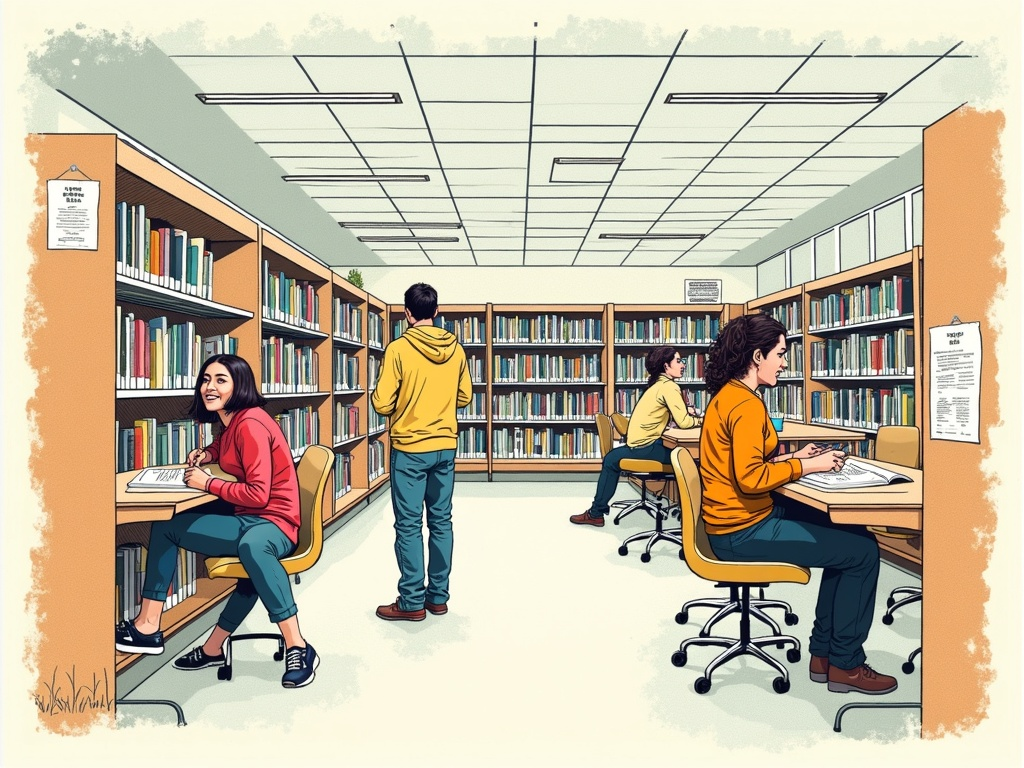
Somewhere along the way, the public library stopped being a building where people go to be quiet around books and became, instead, the only institution in town still willing to do everything. Consider the evidence, freshly posted on the community calendar: toddlers wobbling through rhyme time on Monday, teenagers roaming digital worlds in Rocket League on Thursday, would-be engineers ages 8 to 12 wiring up small catastrophes every Friday afternoon, adults practicing English in a room where no one will laugh at an accent, and, somewhere in the mix, actual lunch. Free lunch. At the library. For kids and teens ages 2 to 18, no questions asked beyond eat it here, please, because that is what the rules require.
It is worth sitting with that lineup for a second, because it reads less like a library schedule and more like a small town trying to raise itself. Storytime handles early childhood development. Discovery Club covers the STEM gap the schools worry about all summer. Game On! keeps teenagers indoors and off the roads on a Thursday night, which every parent should recognize as a public service disguised as recreation. Talk MoVal quietly does the work of a cultural integration office, minus the bureaucracy and the waiting room. And the food program does what food programs do, except this one happens to be shelved next to the biographies.
None of this is new, exactly. Libraries have been sliding toward all-purpose community centers for a couple of decades now, ever since somebody realized that a warm, well-lit, air-conditioned public building with no admission fee is a rare enough commodity that it would be a shame to waste it on books alone. But there is something almost comic about watching the mission creep laid out in a single week's calendar: toddlers on Monday, teenagers with VR headsets on Tuesday, robotics-adjacent mayhem on Wednesday, English conversation practice on Thursday, a bilingual storytime in the evening, and a thrift sale on Friday and Saturday to keep the lights on for all of it. The modern library is not competing with Netflix, as the anxious editorials of a decade ago liked to warn. It is competing with the parks department, the school district's enrichment budget, the ESL program that got cut, and, on Sundays, apparently the food bank.
This is either an inspiring civic story or a slightly worrying one, depending on the angle of the light. The inspiring version: a library that offers rhyme time, robotics, gaming, English conversation, and lunch under one roof is simply meeting people wherever they happen to be, at whatever age, in whatever language, for whatever reason they walked through the door. That is the whole democratic promise of the public library, stretched to cover ground that used to require several different buildings and several different budgets. The slightly worrying version: when one modest building with a limited number of staff and a phone line for RSVPs ends up responsible for toddlers' vocabularies, teenagers' Friday nights, immigrants' English fluency, and hungry kids' lunch, it suggests that a lot of the institutions built to specialize in exactly one of those things have quietly stopped showing up.
Either way, there is something bracingly honest about a nonprofit thrift operation running “with no vehicles and entirely on volunteers” just to keep a food giveaway funded, in the same week that a library branch is hosting Minecraft tournaments for teenagers who probably do not realize how much civic infrastructure their VR headset is currently propping up. It is duct tape and good intentions, doing the job that used to belong to a whole alphabet of agencies.
None of it requires a library card. That, more than anything, is the quiet argument buried under the rhymes and the Roblox: in a town where almost everything now costs something, the library has become the last place that still, stubbornly, does not charge admission for showing up as you are, at whatever age, speaking whatever language, hungry or not. Whether that is a triumph of the library or an indictment of everything else it has had to absorb is left, fittingly, as an open-book question.