Moreno Valley Names Its Way Into Existence
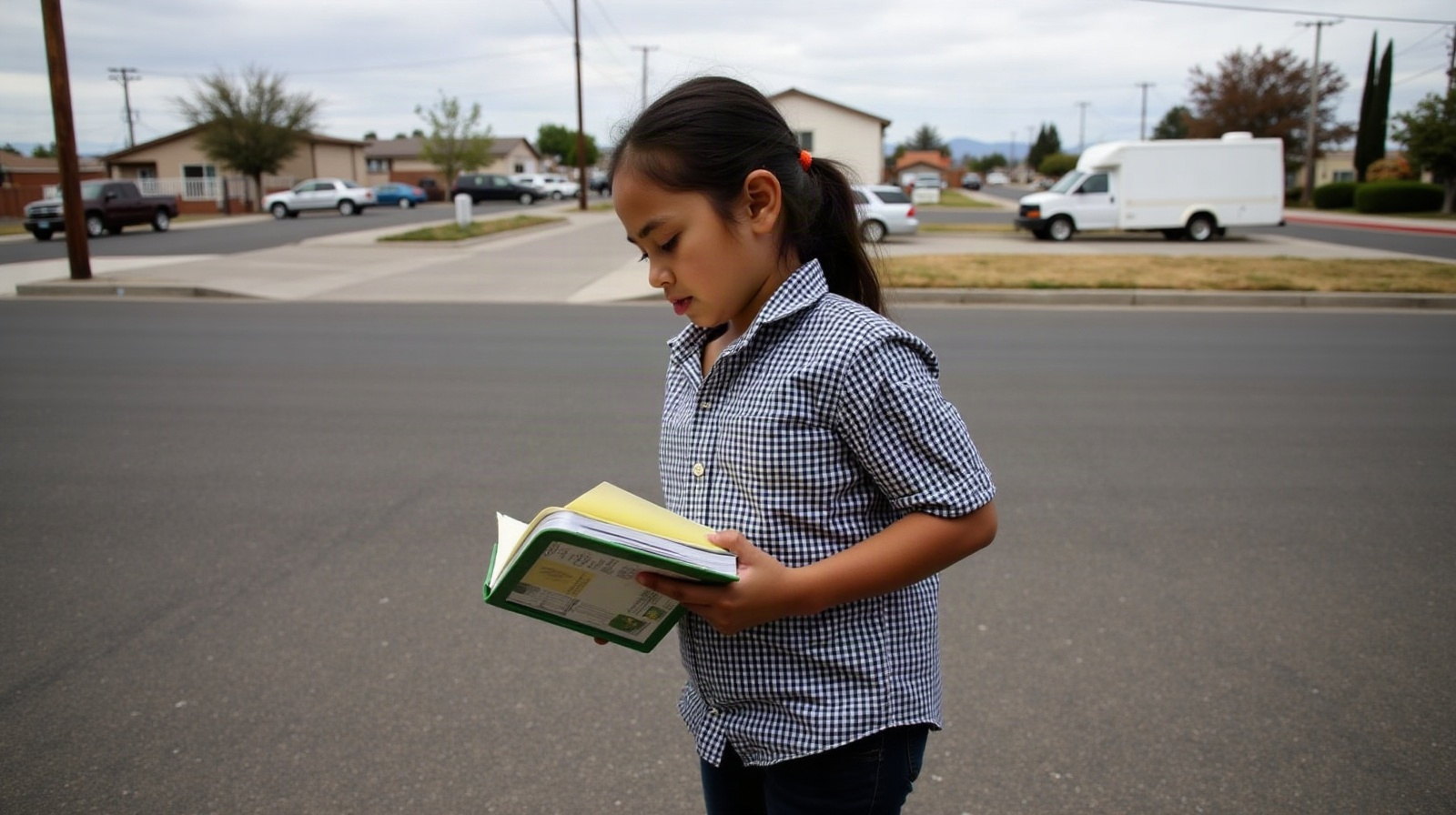
There is no mountain at Shadow Mountain Park. There is, this month, a shadow, cast briefly by a pop-up canopy where a librarian hands out lunch and paperback dignity to children between the ages of two and eighteen. But the mountain itself, the great looming geological justification for the name, remains stubbornly notional. Somewhere in the naming committee's imagination, decades ago, a peak rose grand enough to throw shade across a whole playground. In reality the shade mostly comes from a pop-up tent and, on a good day, a tree that is trying its best.
This is not a complaint. It is, on reflection, one of the more charming habits of a young city still deciding what to call itself into being. A few blocks and several event listings away sits Iris Plaza, a name that promises Florentine stonework, a fountain, perhaps a man selling roasted chestnuts, and delivers instead a health class on the plate method for managing blood sugar, taught by patient people from the Inland Empire Health Plan. No flowers required for entry. No plaza in the postcard sense either. Just folding chairs, good intentions, and a room full of neighbors learning to read a dinner plate like a diagnostic chart.
Then there is Farm House Collective, which this fall alone will host a Motown night, a bingo night, a screening of Matilda, a farmers market, backyard yoga, and a band called the Escapers, none of which, strictly, requires a farmhouse. There is no barn. There is, as far as the record shows, no actual collective of farmers convening to discuss crop rotation between sets. What there is, apparently, works well enough that a person can watch football, buy a candle, do a downward dog, and sing along to “My Girl” all without ever encountering a single stalk of corn.
It would be easy to call this false advertising, the civic equivalent of a restaurant named Mama's Kitchen where Mama has never once set foot. But that misreads the whole enterprise. Nobody walking into Iris Plaza expects Tuscany. Nobody attending Shadow Mountain Park's library pop-up is disappointed by the absence of a summit. The names were never meant as literal signage so much as small acts of aspiration, a kind of civic poetry written by whoever drew up the parcel map and decided that “Lot 14B, Adjacent to Drainage Channel” wasn't going to sell anybody on an evening of bingo.
There's a long tradition of this. Suburban America has always preferred to name its cul-de-sacs after the forests it bulldozed to build them. Oak Terrace with no oaks. Meadowbrook with no meadow, and often no brook. Moreno Valley's contribution is just a little more communal in its optimism, naming not private streets but public gathering spaces, the places where people actually show up to do the unglamorous work of being neighbors: learning to plan a meal that won't spike their blood sugar, picking up a free lunch for a kid on summer break, throwing bingo cards down with people they've known for twenty years.
Maybe that's the quiet trick of it. A city built mostly of warehouses and arterial boulevards needs its plazas and its shadow mountains precisely because it doesn't have them yet, or doesn't have them the way the name imagines. The grandiosity isn't a lie so much as a placeholder, a bet that if you call a folding-chair health class a plaza long enough, something plaza-shaped might eventually grow around it. Public imagination, after all, usually arrives before public infrastructure. Rome wasn't built in a day, and neither, evidently, was Iris Plaza, which currently consists of a parking lot and a very good class on reading nutrition labels.
So let the mountain stay a metaphor a while longer. Let the farmhouse remain unbuilt and the flowers untended. A city naming itself toward something better than its current zoning allows is, in its odd, hopeful, slightly overreaching way, doing exactly what a city is supposed to do.