Moreno Valley: The Odyssey Turns Homer Into a Nolan Puzzle Box, and Mostly Wins
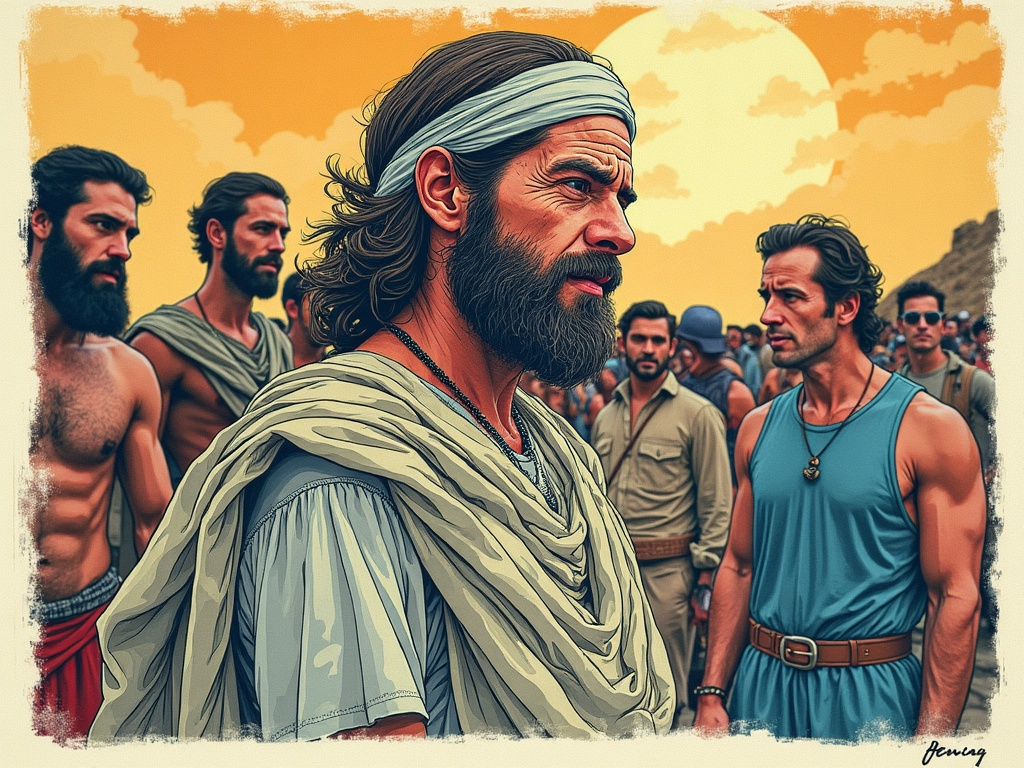
Christopher Nolan has never been shy about ambition, but “The Odyssey” might be the biggest swing of his career: a big-budget adaptation of the foundational text of Western storytelling, filtered through his usual obsessions with time, memory, and men who cannot get home. The result is a film that is often thrilling, occasionally cold, and never less than serious about its source material. Whether that seriousness pays off depends on what you want from a summer epic.
Matt Damon plays Odysseus as a man already fractured by war before the sea monsters even show up, and it's a smart choice. This isn't a swashbuckling adventurer; it's a soldier with a thousand-yard stare who keeps making decisions that prolong his own suffering, and Damon plays that self-sabotage with a weary specificity that keeps the character from becoming a myth-shaped void. Anne Hathaway, as Penelope, gets less screen time but more interiority than these adaptations usually grant her. Nolan intercuts her long wait in Ithaca with Odysseus's journey in a way that recalls the crosscutting of “Dunkirk,” and it works better here than the skeptics might expect, turning patience itself into a form of suspense.
The supporting cast is stacked almost to the point of distraction. Tom Holland and Zendaya bring an easy, lived-in chemistry to roles that could have felt like cameos, while Robert Pattinson, unrecognizable under makeup and a genuinely unsettling vocal register, gets one of the film's best sequences as a mythic antagonist who feels like he wandered in from a different, nastier movie. Charlize Theron and Lupita Nyong'o are given less to do than their talent deserves, but both make the most of single scenes that linger.
Visually, this is Nolan at his most tactile. Shot largely on film and in practical locations, the seascapes have a weight that CGI-heavy epics usually lack; when a ship gets tossed in a storm, you feel the water rather than admire the render. Hoyte van Hoytema's cinematography favors natural light and long lenses, which gives the mythical set pieces an odd, grounded plausibility. The Cyclops sequence, in particular, is staged with a patience that builds dread instead of spectacle for its own sake.
Where the film stumbles is in Nolan's insistence on structural cleverness for a story that doesn't need it. The nonlinear editing, hopping between Troy, the voyage, and Ithaca, sometimes clarifies theme at the expense of momentum, and a few stretches in the middle section feel more like an exercise in narrative architecture than a story anyone is being pulled through. Nolan's script, faithful to Homer's episodic structure, occasionally reads as reverent rather than alive, hitting the famous beats (the Sirens, the Lotus-Eaters, Circe) with dutiful competence rather than surprise.
Ludwig Göransson's score, all low drones and sudden brass stabs, does a lot of work propping up scenes that might otherwise sag, and it mostly succeeds, though there are moments where the music is doing the emoting the images should be doing themselves.
For audiences who loved the chilly grandeur of “Interstellar” or “Oppenheimer,” this will scratch the itch. For those hoping for a rollicking, purely fun myth adventure, it may feel more like homework with excellent production values. It's a film that respects its audience's patience more than it rewards their popcorn instincts, and that's a defensible choice for this material, even when it isn't always an entertaining one.
How to see it in Moreno Valley
-
Power-reclining stadium seating; free parking in the adjacent Moreno Valley Mall lot.
-
A discount second-run house — tickets run well below first-run prices; free lot parking.
Check the theater's own site for current showtimes.