The Rat That Sets the Price of Dirt in Moreno Valley
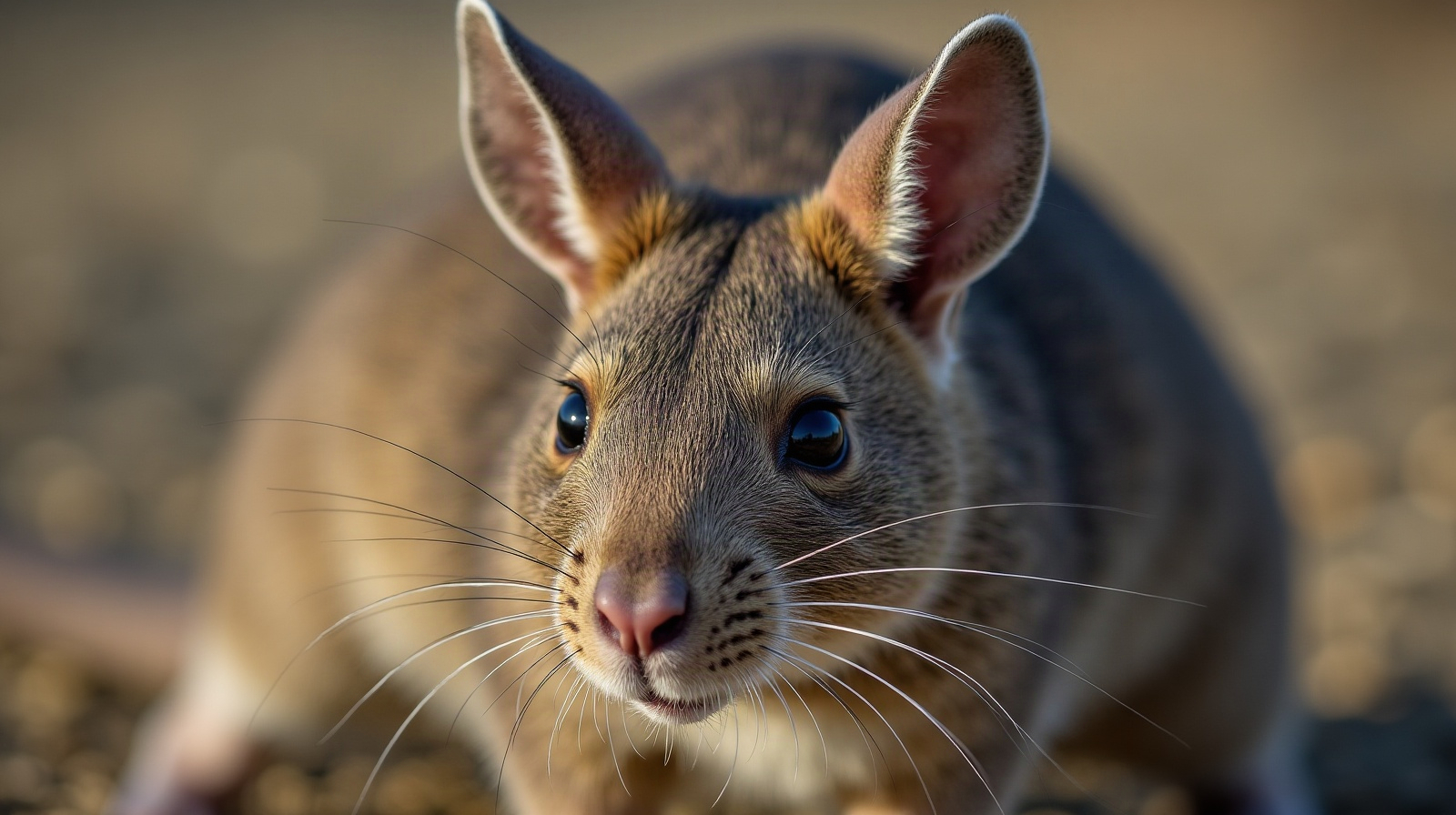
On September 1, tucked into a city council agenda between a library furniture contract and a sponsorship budget, is an item that sounds like paperwork: Moreno Valley will adopt updated mitigation fees tied to the Stephens' kangaroo rat. It is easy to skim past. But the fee schedule is really a small window into one of conservation biology's trickiest problems: how do you put a price on a species' future, and does that price actually buy survival?
The animal in question, Dipodomys stephensi, is a mouse-sized rodent with oversized back legs and a habit of hopping like a tiny kangaroo across the dry grasslands of western Riverside and northern San Diego counties. It digs burrows, eats seeds, and gets nearly all its water from the chemical breakdown of that food, never needing to drink. In 1988, it became one of the first mammals listed as endangered under the federal Endangered Species Act, largely because its native grassland habitat sat directly in the path of Southern California's housing expansion, including land that would become Moreno Valley.
Listing a species as endangered creates a legal problem for any city trying to grow: new construction can “take,” in the law's language, habitat the species depends on, and that is generally prohibited without a permit. The workaround, formalized nationally in the early 1990s, is the Habitat Conservation Plan. Instead of blocking development parcel by parcel, regional agencies draw up a plan that allows some habitat loss in exchange for protecting and connecting other habitat elsewhere, administered through a permit that covers an entire region at once. Western Riverside County operates under exactly this kind of umbrella plan, covering the kangaroo rat and more than a hundred other species together, managed by the Riverside County Habitat Conservation Agency.
The fee the council will adopt is the financial engine of that trade. When a parcel inside the plan area gets developed, the builder pays a per-acre mitigation fee. That money goes toward acquiring and managing reserve land elsewhere, ideally land chosen because it connects to other protected parcels rather than sitting as an isolated island. The fee amount is not arbitrary; agencies periodically recalculate it against the rising cost of buying and maintaining replacement habitat, so a developer today is effectively paying what it costs, in current dollars, to secure an equivalent patch of grassland for the rat somewhere else in the county.
This is where the science gets genuinely interesting, and genuinely unsettled. Conservation biologists have long worried about a concept called effective population size, which is smaller and more fragile than raw population counts suggest. A reserve network scattered across a checkerboard of suburbs can hold, on paper, enough acres to support thousands of kangaroo rats, yet if those acres are chopped into disconnected fragments, inbreeding and local extinctions can quietly erode the population from the inside. Corridors connecting reserves matter as much as the reserves themselves, and getting that connectivity right is as much art as formula.
Whether mitigation banking programs like this one actually achieve what they promise, species persistence equivalent to what existed before development, remains an active and somewhat contested research question. Some studies of habitat conservation plans nationally have found reserves that function well as long-term refuges. Others have found reserves too small, too isolated, or too loosely monitored to reliably sustain the species they were designed to protect. The honest scientific answer is that it depends heavily on execution: how carefully reserve parcels are chosen, how well they are connected, and how rigorously population numbers are tracked over decades, not just in the year a permit is signed.
None of that uncertainty makes the fee meaningless. It represents one of the more ambitious experiments in conservation financing, essentially asking land value itself to fund species survival rather than relying on prohibition alone. For a city like Moreno Valley, still expanding across former grassland, that fee is quietly doing double duty: financing city growth and financing, somewhere in a reserve most residents will never visit, the continued existence of a small hopping rodent that was here long before any of the streets were.
So when the council votes on an updated fee schedule next month, it will not look like a referendum on anything. But embedded in that routine vote is a live question biologists are still working out: can a dollar amount, recalculated every few years, truly stand in for a species' chance at a future.