The Farmhouse Knows What Moreno Valley Forgot
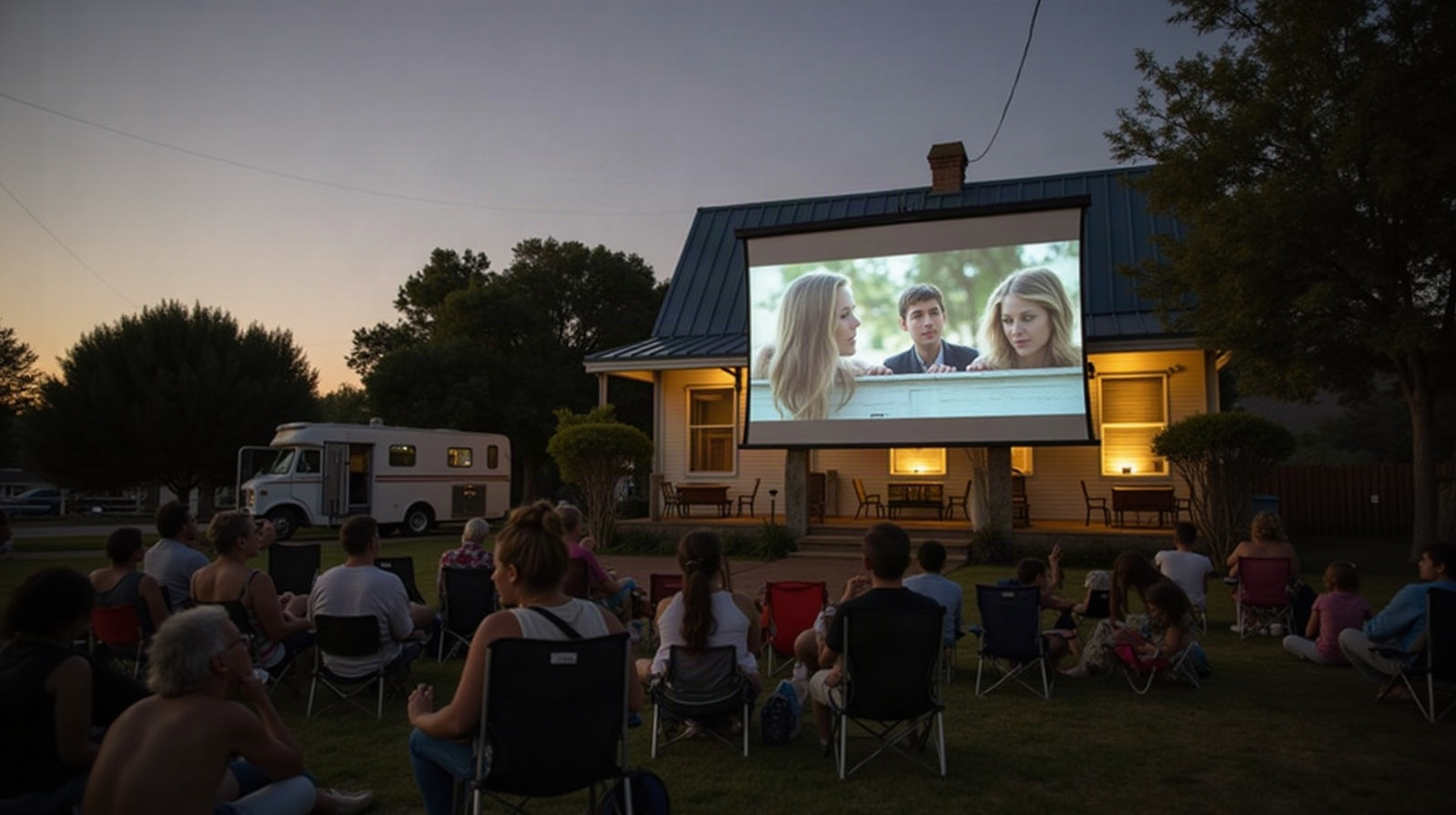
Tonight in Riverside, a converted farmhouse called Farm House Collective will project School of Rock onto an outdoor screen at 7 p.m., and people from across the Inland Empire, plausibly including families from Moreno Valley, will bring lawn chairs and sit in what used to be someone's working acreage. Nobody organizing the screening is thinking especially hard about land use. It's a family-friendly movie night, the kind of low-cost, high-goodwill programming that fills a Friday calendar. But the venue itself is doing more argumentative work than the film. A farmhouse repurposed into a cultural events space is not a neutral backdrop. It's a small monument to a regional pattern that Moreno Valley knows intimately and has done almost nothing to claim for itself.
The Inland Empire was agricultural before it was suburban, and Moreno Valley more than most of its neighbors. Into the 1970s the area now covered by tract housing and warehouse distribution centers was dairies, poultry ranches, citrus groves, and dryland grain fields, the kind of land that gave the old community of Sunnymead its slow, rural rhythm before annexation and incorporation turned it into a bedroom city chasing Riverside's growth. That agricultural identity didn't vanish so much as get paved over in a hurry, replaced by subdivisions and, more recently, by the logistics buildings that now define the Moreno Valley skyline. Almost none of the physical stock of that earlier economy survived as anything other than street names and school mascots. There was no era in which someone looked at an old barn or a fallow packing shed and decided it should become a listening room or an art collective instead of being bulldozed for the next phase permit.
That is exactly what happened, eventually, in Riverside. Farm House Collective takes a structure built for a working farm and gives it a second life as event space, hosting exactly the kind of low-stakes communal programming, movie nights, maker markets, live music, that a region without much purpose-built civic infrastructure improvises out of whatever's left standing. This is not really a story about School of Rock, whose plot (a fraudulent substitute teacher smuggles real creative instruction past an institution that has no official place for it) happens to rhyme nicely with the venue hosting it, a building doing something its architects never planned for, more useful now than it would have been if it had stayed inside its original zoning category. But the film is incidental. The structure is the argument.
Moreno Valley has plenty of equivalent leftover land and leftover buildings. It has vacant citrus acreage, old agricultural parcels sitting in limbo between zoning designations, industrial-adjacent lots that haven't yet been claimed by a distribution center, and a housing stock old enough that some of it predates the suburban boom entirely. What it does not have, at least not visibly, is a habit of treating that leftover inventory as raw material for cultural space rather than as inventory awaiting its next commercial use. The default assumption in this city has been that land moves in one direction only, from agricultural to residential to logistics, each phase erasing the last. Riverside's farmhouse suggests a different default is possible: that a structure can sit outside the extraction logic of the market for a while and host something with no ROI beyond a Friday night's worth of shared attention.
This matters because cities eventually get the cultural infrastructure their land-use habits allow. A place that treats every underused parcel as a placeholder for the next warehouse will, unsurprisingly, end up with warehouses and very little else. A place that occasionally lets an old building sit as ambiguous, semi-public, only loosely commercial space ends up with the raw material for the kind of informal civic life that shows up on a Friday events calendar without a marketing budget behind it. Moreno Valley's own agricultural remnants, wherever they still exist in deed records and half-cleared lots, are not currently being asked to do that work. They're being asked to become the next phase of something else, usually faster than any resident has time to notice what stood there before.
None of this requires nostalgia for the dairy ranch era, which was hardly an idyll and which nobody is proposing to resurrect. It requires something more modest: noticing that adaptive reuse of agricultural leftovers is not an accident that only happens to other cities' old barns. It's a policy choice available to any jurisdiction still holding parcels that haven't yet been fully converted to their next commercial use. Moreno Valley has the raw material. What it hasn't yet had is the imagination, or the patience, to let a building sit still long enough to become something other than what it was zoned for.