The Sound Moreno Valley Only Watches Get Made
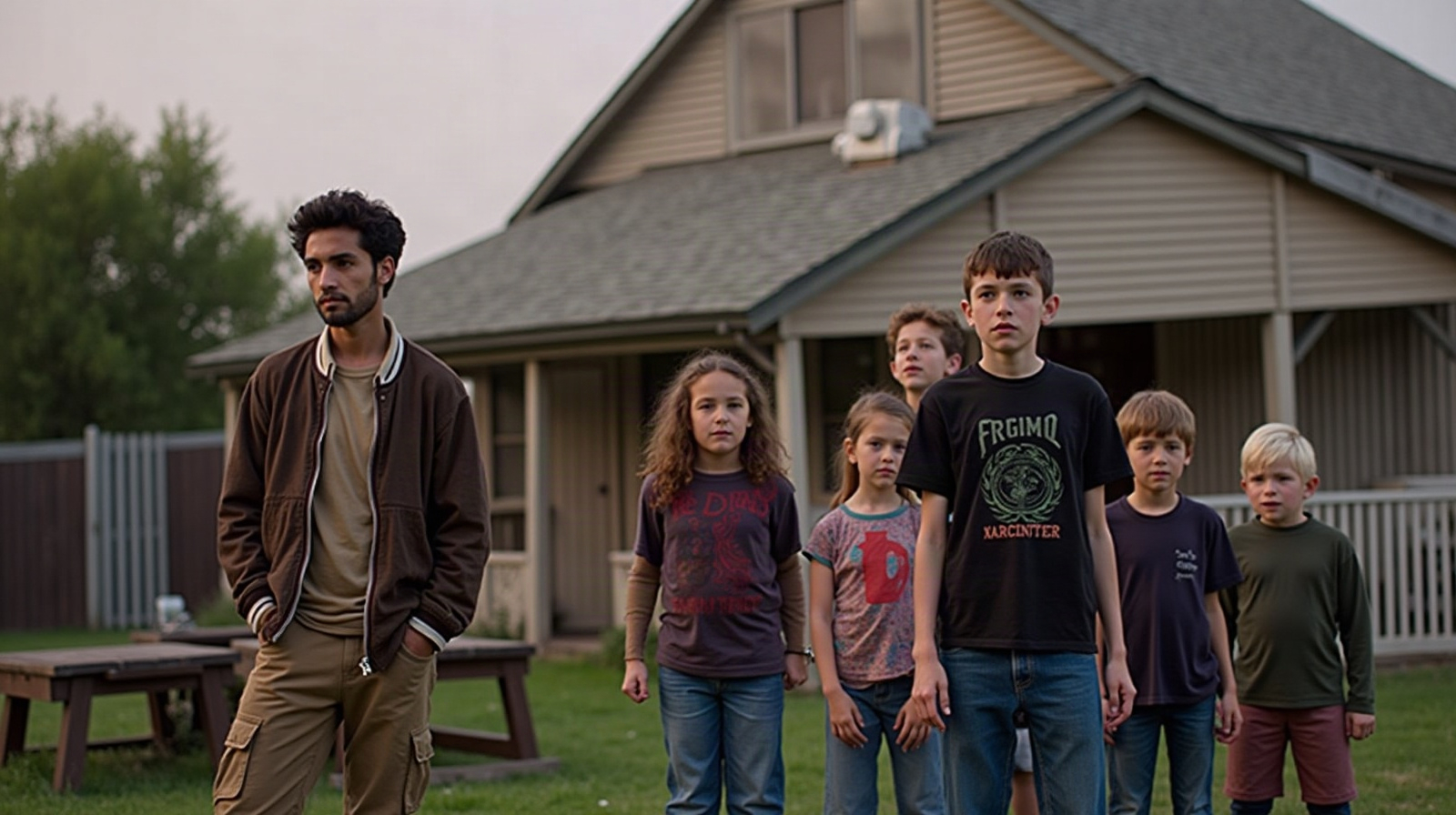
This week, an audience in the region will sit on lawn chairs at Farm House Collective in Riverside and watch School of Rock, the 2003 film in which a failed guitarist teaches a class of overachieving ten-year-olds to write, arrange, and perform an original song. It is a movie about the difference between consuming music and making it. The joke, and the ache, of showing it to Moreno Valley's own calendar this fall is that almost nothing else on that calendar makes the same distinction.
Look at what the season actually offers. Motown Night, at the same venue, promises dancing to songs written six decades ago by people who are not there. The Escapers and Jackie Mendez perform a set that, whatever its merits, is built for a crowd that came to hear things it already knows. Thursday Throwdown pairs live music with food, the music functioning as ambience for the food rather than the reason anyone bought a ticket. Sunday and Monday nights are given over to football on a screen, a communal ritual organized entirely around watching other people's athletic labor. Bingo night hands out cards and daubers for a game with no skill and no output beyond a winner. Even the farmers market and the yoga sessions, wellesome as they are, sell participation in something imported: a wellness trend, a produce stand, a format designed elsewhere and franchised here.
None of this is unusual for an American exurb built in the last thirty years around big-box retail and warehouse logistics rather than around theaters, conservatories, or civic auditoriums. But it is worth naming plainly what this pattern adds up to: a leisure economy almost entirely organized around spectation and nostalgia, with essentially no local infrastructure for people, especially young people, to make something and have it heard. There is no listed open mic for original songwriting. No teen battle of the bands. No community theater production, no gallery opening, no all-ages venue where a kid could do what the fictional students in School of Rock do, which is discover that they can write a bridge, hold a rhythm, finish a song. The region's actual programming teaches consumption fluently. It has almost nothing to say about production.
This matters because the two are not interchangeable, and the difference tracks class and infrastructure as much as taste. Watching a tribute band or a football broadcast requires nothing from the audience but attendance and a drink order. Making music, or theater, or visual art requires instruments, instruction, rehearsal space, an audience willing to sit through something unfinished, and, crucially, adults who believe that a teenager's original work deserves a stage. Those things cost money and require institutions willing to program risk instead of certainty. A brewery-adjacent event space can sell out a Motown night with zero creative risk. It cannot as easily sustain a series built around unproven local songwriters, because unproven local songwriters do not reliably fill seats or move drink tickets. The market logic that shapes Farm House Collective's calendar, and by extension much of the region's evening culture, selects for consumption because consumption is what pays rent.
So when Moreno Valley's own civic and educational institutions think about culture for young people, the most visible offering this month is a movie screening. Watching, once again, stands in for making. It is worth asking what it would take to invert that, even modestly. A city library, a rec center, a school district with a black box theater could each, in principle, host what commercial venues structurally cannot: a night where the content is unfinished, amateur, and made by someone from here rather than performed by someone passing through or covering someone long gone. That kind of programming does not need to be lavish. It needs only to treat local kids as potential authors rather than as an audience to be filled.
The stakes are not really about music. They are about whether a fast-growing place organized around warehouses, data centers, and drive-time retail can also produce citizens who expect to shape their own culture rather than simply attend it. School of Rock ends with the kids writing a song that is unmistakably theirs. It will screen once, on a lawn, and then the region's calendar will return to its regular business of covers, broadcasts, and games with no wrong answers. A place that only ever watches its music being made somewhere else, or made a long time ago, is quietly teaching its children what role they are meant to play: seated, appreciative, and silent.