Moreno Valley: Why Some Brains Say No to Virtual Reality
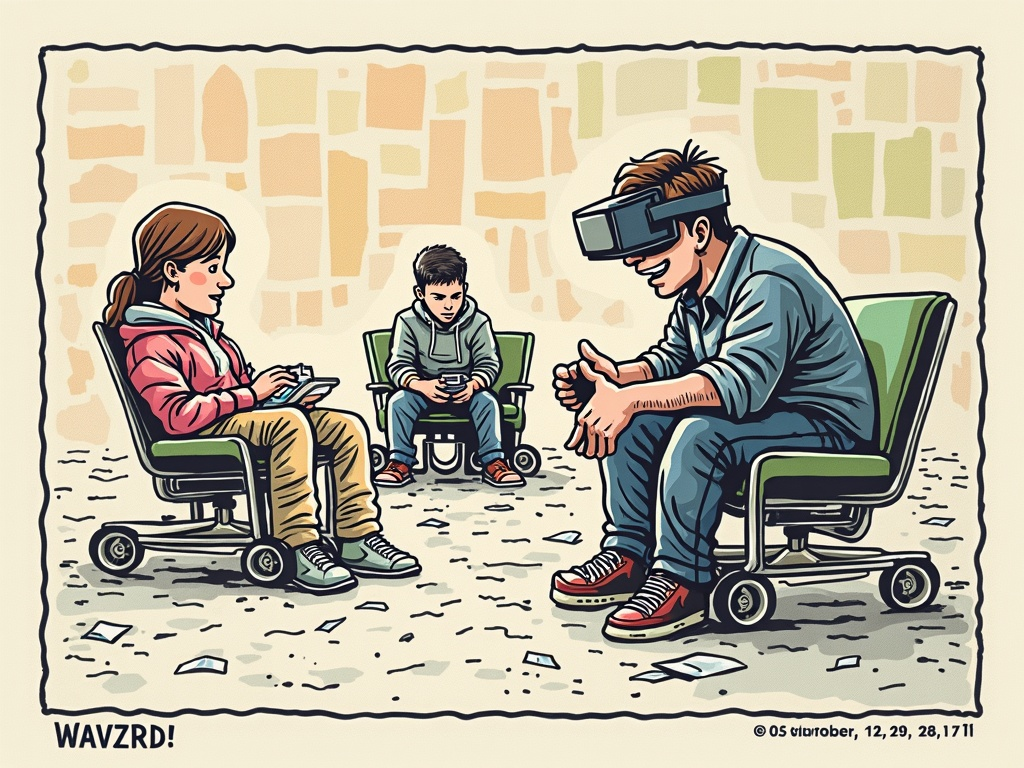
On December 12, teenagers and young adults filing into the Moreno Valley library's Game On! sessions, at both the Iris Plaza branch and the Mall branch, will get a rare public shot at virtual reality gear alongside Rocket League and Minecraft on the big screens. Strap on a headset, and for some people the experience is pure delight. For others, ten minutes in, the room seems to tilt and the stomach starts arguing. Neither reaction is a character flaw. It is one of the more interesting quirks of how the brain keeps track of where the body is in space.
The leading explanation researchers reach for is called sensory conflict theory. It has been around in one form or another since the 1970s, originally built to explain ordinary motion sickness, and it still holds up reasonably well as the best available account, even though scientists keep finding wrinkles that complicate it.
Here is the basic idea. The brain builds its sense of motion from several sources at once: the eyes, which track movement in the visual field, and the vestibular system, a set of fluid filled canals in the inner ear that sense rotation and acceleration. Normally these two systems agree. Walk down a hallway, and your eyes see the walls slide by while your inner ear feels the corresponding sway and bob of your own steps. Everything matches, and the brain stays quiet.
Trouble starts when the two systems tell different stories. Anyone who has tried to read in the backseat of a moving car has felt this firsthand. The eyes, fixed on a page that is not moving relative to the hands, report stillness. The inner ear, meanwhile, feels every turn and stop of the car. The mismatch is exactly the kind of contradiction the brain does not like, and for many people it produces the queasy, cold sweat feeling of carsickness.
Virtual reality flips the same mismatch in the opposite direction. Inside a headset, the eyes see a virtual world sweeping past as a character runs or a spaceship banks, full of visual motion cues. But the person's actual body, sitting or standing in a library meeting room, is not accelerating or turning at all. The inner ear insists nothing is happening while the eyes insist otherwise. That contradiction is what researchers now often call cybersickness, and it produces symptoms very similar to old fashioned motion sickness: dizziness, nausea, sometimes a cold sweat or headache.
How common is it? Studies over the past decade have found wide ranges, with some samples reporting symptoms in as few as one in five users and others finding it in the majority, depending heavily on the content, the headset, and the individual. Fast turning or accelerating scenes tend to provoke it more than calm, stationary ones. Age, prior gaming experience, and even how well someone slept the night before all seem to shift the odds, though scientists are still sorting out how much each factor matters and why some people barely notice a thing while others tap out within minutes.
Sensory conflict is not the only theory on the table. A newer rival, called postural instability theory, argues that what actually matters is not the mismatch between senses but a delay in the brain's ability to keep the body properly balanced when its usual visual anchors are scrambled. The debate between these frameworks is still active, and neither fully explains every case, which is a useful reminder that even a decades old idea in science can remain unsettled at the edges.
None of this makes VR unsafe or the library's plan reckless. It simply means the headset is quietly running a real experiment in multisensory integration every time someone puts it on, right there among the Roblox matches and cardboard Minecraft builds. For anyone curious about how their own brain handles that contradiction, December 12 offers a low stakes, free way to find out, no lab coat required.