The Building That's Basically a Giant Space Heater: What Data Centers Ask of Moreno Valley
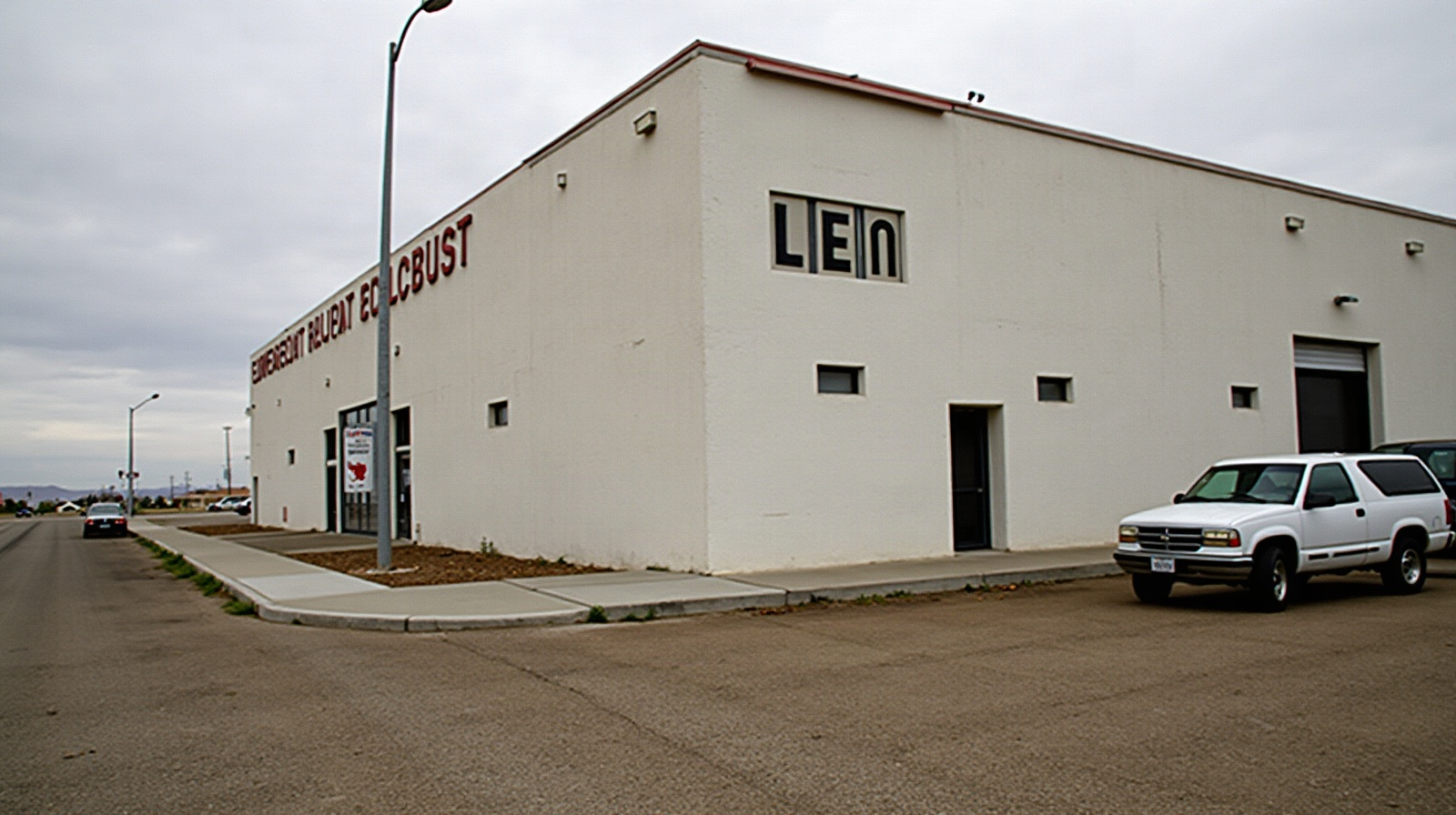
On September 8, the Moreno Valley City Council will hold a study session on data centers, with the public works department leading the discussion. The meeting notice includes a small phrase worth pausing on: this affects all districts. Not just the neighborhood near a proposed site. All of them. To understand why a windowless building full of computer servers would matter to someone across town from it, it helps to start with a basic fact of physics that most people never think about: electricity, once it goes into a machine, has to go somewhere.
A data center is, at its core, a warehouse of servers doing math very fast. Those servers are made of transistors, and transistors resist the flow of electric current. That resistance is not free. Under the first law of thermodynamics, energy cannot simply disappear, and in a resistor, the energy that isn't doing useful computational work gets converted into heat. This is the same principle at work in a toaster or an incandescent light bulb. A data center, in effect, is one of the most efficient heat generators humans have built, except the heat is a byproduct nobody wants, because a server that gets too hot slows down or fails.
So every data center needs a cooling system, and the choice of system is where things get locally interesting. Broadly, operators pick between two strategies. One relies on mechanical air conditioning, refrigerant loops and chillers that consume large amounts of electricity to move heat out of the building. The other uses evaporative cooling, where water absorbs heat as it turns to vapor, the same principle that makes a person feel cooler standing in front of a wet towel and a fan. Evaporative systems can be remarkably efficient in a hot, dry climate, because evaporation happens fastest when the surrounding air is thirsty for moisture. Moreno Valley's climate, with its low humidity and long dry stretches, happens to be close to ideal for that kind of cooling.
That efficiency comes with a tradeoff researchers sometimes call the water-energy nexus: save on electricity, and you often spend more water, or vice versa. Estimates of exactly how much water a large data center uses vary quite a bit depending on its size, cooling design and how it is measured, and this is still an active area of study, so any specific number should be read as a rough range rather than a fixed fact. But industry and academic reporting has repeatedly put single large facilities in the range of hundreds of thousands of gallons a day, and some much higher, comparable to the daily use of a small residential neighborhood. In a region where water arrives via imported supply and managed groundwater rather than abundant local rainfall, that is not a trivial line item.
This is presumably why the public works department, rather than planning staff alone, is fronting the September 8 conversation. Water delivery, electrical capacity and the grid that feeds them are shared infrastructure. A data center's cooling towers do not just affect the parcel they sit on; they draw from the same pipes and substations that serve homes, schools and businesses throughout Moreno Valley, which is the literal reason the meeting notice says all districts. Electricity demand from data centers has also become a genuine topic of concern for utilities across California and the broader region, since a single large facility can require as much power as a small town, and utilities plan years in advance for that kind of load.
None of this means a proposed data center is automatically good or bad for Moreno Valley. It means the underlying science, how heat moves, how water evaporates, how much power a server rack draws, sets real constraints that the council and public works staff will have to work within regardless of where a facility ends up. The study session won't resolve those constraints on September 8. What it will do, ideally, is put the physics on the table before the zoning maps come out, so residents can ask questions grounded in what a data center actually does, rather than what the term merely sounds like.