Why the Same Sandwich Doesn't Spike Everyone's Blood Sugar the Same Way
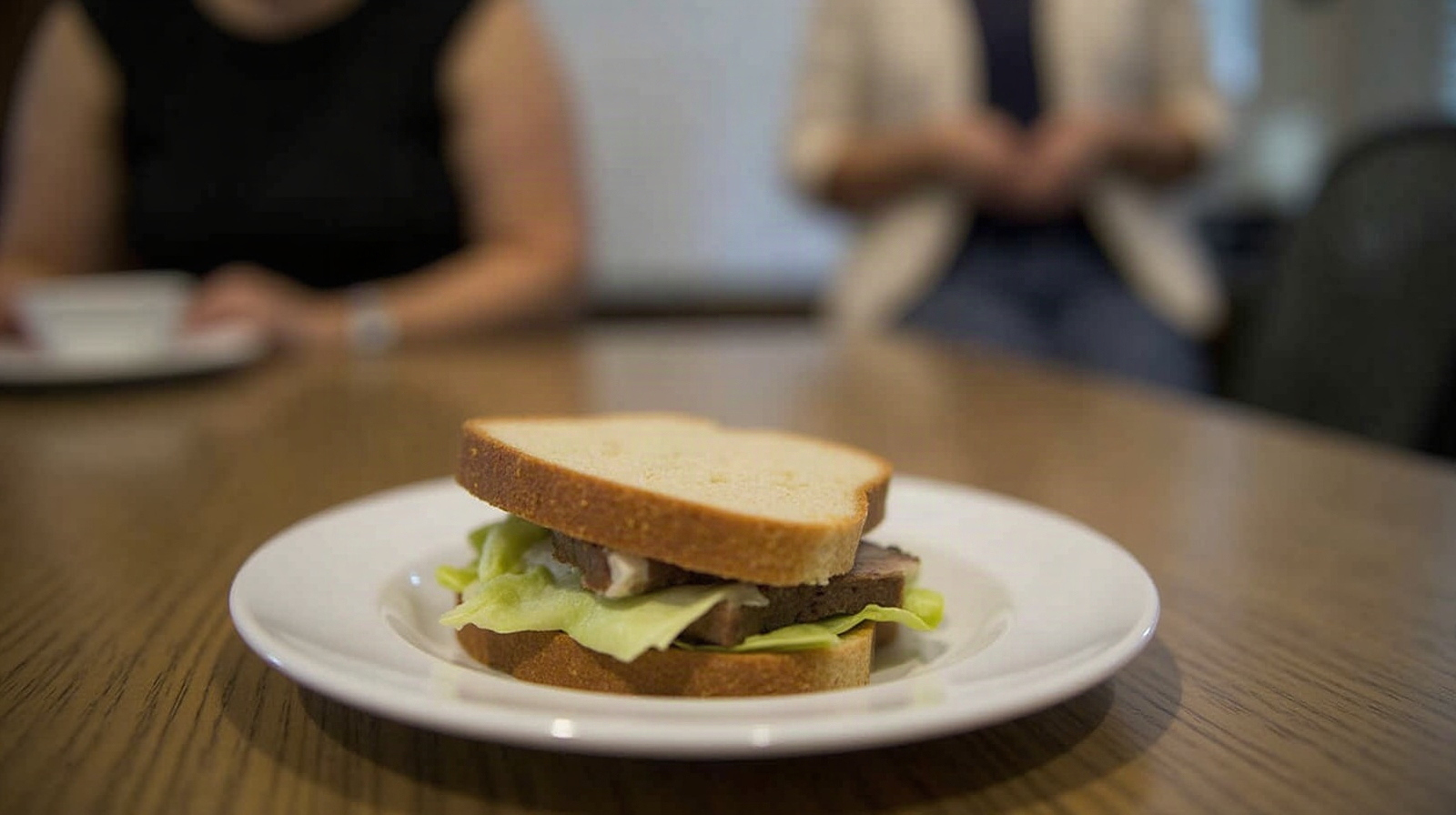
At Iris Plaza this month, Inland Empire Health Plan is running a free class called Diabetes Among Friends, teaching people to build meals using something called the plate method. It is a simple visual trick: split your plate in half for non-starchy vegetables, a quarter for protein, a quarter for carbohydrates. No scale, no calculator, no app. Just geometry.
It works for a lot of people, and the reason it works turns out to be a genuinely interesting piece of biology, one that scientists are still arguing about in ways that would surprise anyone who thinks nutrition science is a solved problem.
Start with what happens when food hits your bloodstream. Carbohydrates break down into glucose, which insulin, a hormone made by the pancreas, ushers into your cells for fuel. In type 2 diabetes, cells respond sluggishly to insulin's knock on the door, so glucose lingers in the blood longer than it should. Not all carbohydrates raise that glucose level at the same speed. A measure called the glycemic index ranks foods by how fast they spike blood sugar compared with pure glucose. White bread ranks high. Lentils rank low. Glycemic load adjusts that ranking for portion size, because eating a thimble of white rice and a bowl of it are not the same experiment.
Fiber is the quiet hero in this story. Soluble fiber, found in beans, oats, and vegetables, forms a gel-like tangle in the gut that physically slows how fast sugar molecules reach the bloodstream. Protein and fat do something similar by slowing gastric emptying, the rate at which the stomach hands food off to the intestines. That is the actual mechanism behind “eat your vegetables first.” It is not a moral instruction. It is plumbing.
The plate method is a low-effort way to load up on that fiber and protein automatically, without anyone doing math at the dinner table. Half the plate in vegetables and a quarter in protein means the carbohydrate quarter enters a slower, gentler system.
Here is where it gets more complicated, and more interesting. Research over the past decade, including a widely cited 2015 study out of the Weizmann Institute in Israel, used continuous glucose monitors to track how hundreds of people responded to identical meals, down to the same slice of bread. The finding: blood sugar responses varied enormously from person to person, sometimes dramatically, for reasons still not fully mapped, involving gut bacteria composition, sleep, activity levels, and genetics. One person's banana might barely register. Another's might spike hard. This line of research is still young and the tools, at-home glucose monitoring for people without diabetes, are still working out their limits, so it would be a mistake to treat any single study as the final word on how bodies handle carbohydrates. But the broader pattern, that individual glycemic responses vary more than a single chart can capture, has held up across multiple research groups since.
None of this makes the plate method wrong. It makes it a smart general-purpose tool built on solid, well-established physiology, fiber slows absorption, protein slows emptying, portion size matters, while the emerging science adds a layer of humility about how much any one chart can predict for any one person. That is not a contradiction. It is how science usually works: broad principles hold, and the closer researchers zoom in, the more individual variation they find sitting inside those principles.
There is something almost architectural about the plate method that fits the moment. It does not require literacy in glycemic index tables or grams of carbohydrate. It requires a plate and a rough sense of quarters and halves, the same intuitive geometry most people already use without thinking, just redirected. Inland Empire Health Plan's class at Iris Plaza is teaching a shortcut, not a shortcut around biology, but a shortcut through it, built on decades of research into how sugar moves through blood and how fiber and protein throw sand in its gears.
The Weizmann-style research suggests the next frontier is personalization, understanding why the same forkful behaves differently in different bodies. That work is still unfolding, one continuous glucose monitor at a time. For now, the plate stays a reasonable place to start, not because it is precise, but because the physics of digestion do not particularly care whether you count.